REPORTER'S TRANSCRIPT OPENING STATEMENT By Ms. Robinson Jury Trial - Day 1
Jun 16, 2026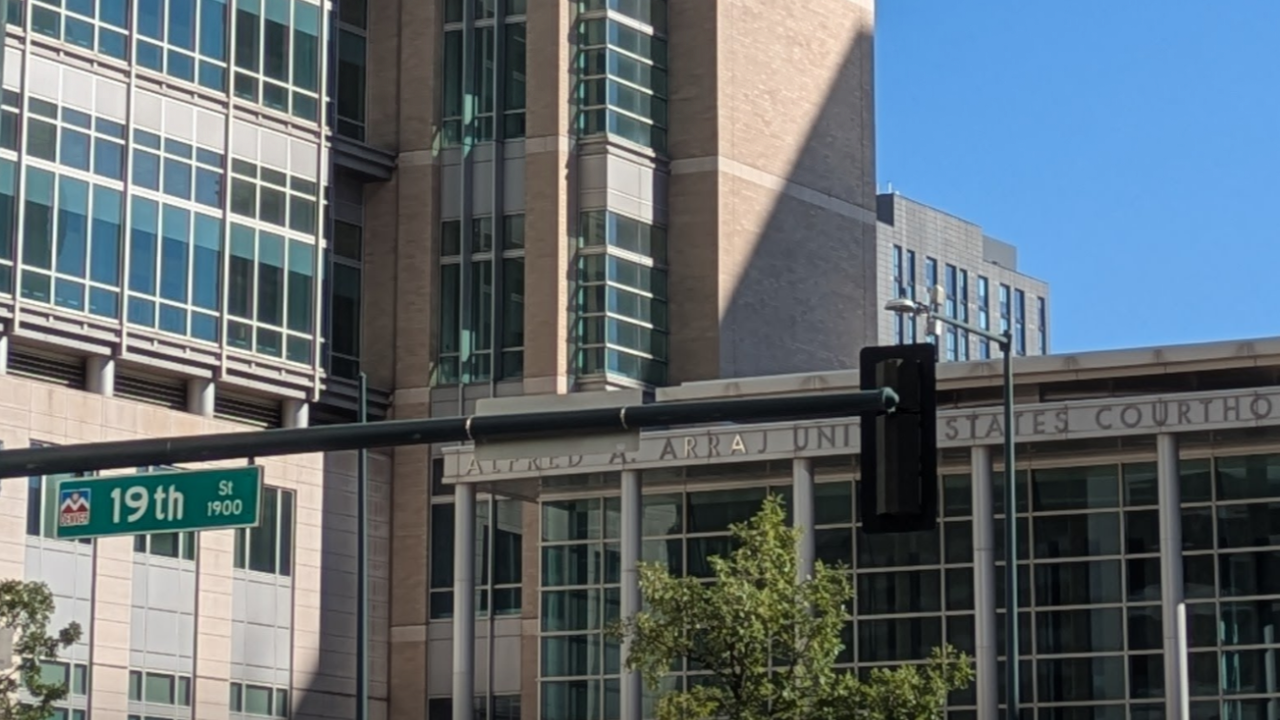
IN THE UNITED STATES DISTRICT COURT FOR THE DISTRICT OF COLORADO
Civil Action No. 22-cv-00986-CNS-STV
DONQUENICK YVONNE JOPPY,
Plaintiff,
vs.
HCA-HEALTHONE LLC, D/B/A THE MEDICAL CENTER OF AURORA,
Defendant.
--------------------------------------------------------------
Proceedings before the HONORABLE CHARLOTTE N. SWEENEY, Judge, United States District Court for the District of Colorado, and a jury of nine, commencing on the 11th day of August, 2025, in Courtroom A-702, United States Courthouse, Denver, Colorado.
For the Plaintiff: JENNIFER C. ROBINSON, Robinson & Associates Law Offices
For the Defendant: DAVID D. POWELL, JR., Garnett Powell Maximon Barlow
OPENING STATEMENT By Ms. Robinson (pages 150 - 171)
THE COURT: All right. Well, then we are ready to proceed. I'm going to read some introductory instructions to you. This is more of a general set just to guide you for the start of the trial and some general principles. The more substantive instructions on the rules of law that apply to these claims will be given to you at the close of evidence.
(The Court reads the introductory instructions.)
THE COURT: So with that, we will now hear opening statements. As I mentioned, the plaintiff goes first. So, Ms. Robinson.
MS. ROBINSON: Thank you, Your Honor.
Thank God for millennials. Nearly half the staff at the Aurora hospital thought that the hospital responded with punishment when errors occur, according to the hospital's own internal survey. What brings us to this federal courthouse today are the safety rules that protect all of us, but these rules protect us only if jurors choose to enforce them. This case involves three rules, and the judge will give you the law that applies to each of them.
First, corporations must not discriminate against employees based on race. Second, corporations must not retaliate against employees when they speak up about discrimination. Third, corporations must care about the law.
If you remember one thing about this case, remember this, we protect those who protect us.
Now, let me tell you the story of what happened in this case. It's a simple case. You might already be able to see what happened. A corporation discriminated against an employee based on race. When the employee reported and opposed the discrimination, the corporation retaliated, and all because the corporation did not care about the law.
My client's name is DonQuenick Joppy, and she's been damaged for life. The defendant is a multibillion dollar corporation with a net worth of over $8 billion. It owns and operates multiple hospitals across the state, including The Medical Center of Aurora where Ms. Joppy worked.
If this hadn't happened to Ms. Joppy, this could have happened to any frontline worker at the hospital. A surgical nurse, an admissions clerk, a janitor or a pharmacist, any one of the thousands of employees who show up every day to keep hospitals running. And it could just as easily happen to any employee at any corporation in America, for that matter.
This case is not about racial slurs or overt insults. It's about the deeply harmful racial discrimination that reveals itself in how a person is treated day to day compared to others. It's about retaliation against a nurse who had the courage to speak up. For this type of discrimination, you have to follow the signs and red flags. And we've been able to put together a checklist of the evidence to see if the law has been broken.
Here's the checklist for following the first rule: Managers and HR know the law, managers and HR see signs or red flags of discrimination, managers and HR must prevent discrimination. If the company follows this checklist, there won't be any discrimination.
This is the checklist for following the second rule: Managers and HR know the law, manager and HR see signs or red flags or retaliation, managers and HR prevent retaliation. If the company follows this checklist, there won't be any retaliation.
The checklist for the last rule is the most important, and it concerns the why, and we will save it for the last.
Now, we didn't just make up these rules, these checklists. They came from the hospital's policies and are based in the law, as well as common sense. For the first item on the checklist, you will see that managers and HR know the law. They know it's wrong to discriminate based on race. They know it's wrong to retaliate when someone opposes discrimination. It's right there in their employee handbook. Race discrimination and retaliation are strictly prohibited.
For the second items on the checklist, you will see evidence of signs or red flags of discrimination and retaliation. Here's what happened. In late 2018 and early 2019, hospital leadership and human resources learned that a group of charge nurses in the intensive care unit were bullying and targeting other nurses. You will hear that an ICU supervisor referred to these charge nurses as the mean girls. They knew that there were also male nurses in this mean girls group.
Now, the chief nursing officer described them as a clique, and the head of human resources admitted she knew about the bullying and confirmed that multiple nurses had resigned because of it. You decide if this was a sign or red flag that the hospital had a problem in the ICU.
Around that same time, Ms. Joppy was working in the ICU at the hospital and was also raising concerns of harassment and bullying by this same group of mean girls, the clique. Ms. Joppy was the only black ICU nurse remaining at the hospital in a staff of about 80. In late 2018, Ms. Joppy began noticing that she was being treated differently than her white colleagues. While there was some general workplace bullying that affected nurses of all races, what Ms. Joppy experienced went further.
She was singled out for harsher public scoldings, yelled at and demeaned in ways that white nurses did not face. She was given less support and heavier workloads with more critically ill patients than others, putting both her wellbeing and patient safety at risk. She was disproportionately scheduled for weekend shifts and repeatedly segregated from the rest of the staff in her assignments.
Over time the message was clear. She wasn't viewed as part of the team.
This was not simply a difficult work environment. It was a consistent pattern of isolation, harsher discipline, and unequal assignments that targeted her because of her race. And then the gossip started. The nurses that were targeting Ms. Joppy began spreading false and damaging rumors that she kills patients, that she's incompetent, that she's unsafe and no one wants to work with her, and she spends too much time with the patients.
There was no investigation into these rumors, no opportunity for Ms. Joppy to respond. Instead, despite a positive performance review just months earlier, the hospital labeled her a low performer, more red flags. When one of the charge nurses in the clique demeaned Ms. Joppy's professional abilities and told her --
MR. POWELL: Your Honor, I'm going to object. This is hearsay.
THE COURT: Let me go to it. Sorry. Overruled. I'm going to allow it. Again, the opening statement is not evidence. It is what Ms. Robinson believes the evidence will demonstrate.
MS. ROBINSON: Thank you, Your Honor. When one of the charge nurses in the clique demeaned Ms. Joppy's professional abilities and told her that because she was good at cleaning she should clean his house and clip his dog's toenails, this is more than just bullying. It's discriminatory. You decide if this is another red flag.
Ms. Joppy reported this conduct to her supervisor Paul Page, but the hospital never investigated. More red flags. When she tried to escape the toxic environment by transferring to a different unit, she was told that she was not eligible because she was on a performance improvement plan. Problem? She was not on a performance improvement plan. Another red flag.
When Ms. Joppy asked Mr. Page why she had been blocked from transferring, she reminded him about the bullying. You will hear that she stated to him, you said you were going to straighten it all out, but you have no clue how cruel your team is. Should I just pack my stuff now? Still no investigation, no follow-up, no accountability.
Five days later, the hospital put her on a 60-day performance improvement plan. As part of the plan, she had to be more respectful to the charge nurses bullying her. The performance improvement plan itself was abandoned after that supervisor, Paul Page, stepped down and new management claimed they didn't know about it. More red flags.
Now, the hospital may argue that some of those nurses that were bullied were white, so there could be no race discrimination, but here's the difference. They left on their own terms. They weren't placed on performance improvement plans. They weren't told to be more respectful to the nurses that were bullying them. They were not falsely accused.
That's where race comes in. It's not about being bullied. It's about how differently the hospital responded to Ms. Joppy's complaints.
You will see that Ms. Joppy was known in her community as Denver's neighborhood nurse. She advocated passionately for her patients. She went door to door in underserved communities teaching CPR. The American Heart Association recognized her for her life-saving outreach, and she was nominated three times for the Daisy award, a prestigious national nursing honor. Before Ms. Joppy complained, her performance review was positive, her supervisor described her as compassionate, supportive of coworkers, and noted that her integrity stood out.
Here's where things changed. The next opportunity to accuse Ms. Joppy came in May of 2019 when one of the mean girls, Lindsay Jordan, made an allegation against Ms. Joppy that could end a nurse's career and follow her for the rest of her life. The hospital seized on it.
So here's what happened. On May 23rd, 2019,
Mr. Stewart Brown, a 93-year-old man, arrives by ambulance at the emergency room. His lungs, kidneys, and other vital organs were failing. He had severe sepsis. He was unconscious, unresponsive, and not breathing. His niece will testify that she rode with him in the ambulance and handed Mr. Brown's DNR order to the ambulance crew. Hospital records confirm that he was a do not resuscitate, yet the hospital still placed him on a ventilator without sedation and gave medications to artificially prolong his life. When they ventilated him, he showed no reaction. No cuff, no gag, no reflex, no movement during a procedure that would normally be very painful without sedation.
Shortly afterward Mr. Brown was transferred to the ICU where Ms. Joppy began her care. He remained unresponsive. You will see that despite test results showing the patient was rapidly dying, Ms. Joppy followed established protocol and did all she could to provide compassionate care, keeping the patient comfortable, trying to warm his body, and keeping his family informed and supported.
By early morning Mr. Brown's niece reminded the dayshift doctor, Dr. Forrester, that Mr. Brown was a DNR and he would not want any of this, and she requested that the hospital discontinue all treatment. After speaking with the family, Dr. Forrester issued an order to the dayshift nurse Karen Welter, and Dr. Forrester will testify that his order was to stop all drugs that were artificially prolonging the dying process and to remove ventilator support.
Nurse Welter conveyed the order to Nurse Joppy who agreed to stay past her shift to assist with Mr. Brown's end-of-life care. Ms. Joppy followed Dr. Forrester's order.
First, medications were stopped. Then Nurse Joppy called respiratory therapist Darryl Shafer to remove the ventilator. He said he was tied up. Minutes later she called again letting him know the patient was rapidly dying. Death was imminent.
Ms. Shafer -- Mr. Shafer gave Ms. Joppy instructions over the phone on how to turn off the ventilator. Nurse Joppy followed those instructions and turned the ventilator off at 8:15 a.m. At the time, the patient's respiratory rate was zero. You will see that when Ms. Joppy and Mr. Shafer turned the ventilator off, Mr. Brown's endotracheal tube remained in place. The evidence will show that this was not the standard way to discontinue ventilator support, but it was not a harmful process either, and with the imminence of death.
Mr. Brown, never regained consciousness and showed no signs of pain or distress. His niece was present during this entire process, was grateful to Ms. Joppy, shared a prayer with her, and expressed no concern. His death was pronounced at 8:28 a.m., just eight hours after arriving in the emergency room.
Later that day, Ms. Jordan, the charge nurse who complained about Ms. Joppy resulting in the PIP, raises concerns that turning the ventilator off without removing the tube caused the patient to suffocate. Ms. Joppy had called Ms. Jordan twice that morning, but Ms. Jordan never responded or returned her calls. You will hear Dr. Forrester say that a patient can still breathe through the tube after the ventilator is turned off.
Four days later Ms. Joppy's supervisors met with her and told her that she was under investigation for turning off a patient's ventilator. Not an investigation into all of these circumstances of the patient's end-of-life care, but what she did. During the meeting Ms. Joppy again raised concerns about her treatment, which were dismissed as cultural issues. The hospital then submitted an internal incident report that concluded that Ms. Joppy's actions had no impact on the patient, but the hospital suspended her anyway.
Ms. Joppy then contacted corporate headquarters to report bullying, unfair treatment, and retaliation for speaking up as a woman of color. She is complaining of race discrimination. It's what the law calls protected activity. You're allowed to say something when you see something.
Corporate said it would escalate the discrimination claim, but no one ever followed up with Ms. Joppy. No investigation, no response, no protection. Yet investigation of Ms. Joppy for Mr. Brown's care begins. You decide if this is a big red flag of discrimination or retaliation.
In making that decision, you will be guided by what the law is according to the Court's instructions. One of the ways you can determine whether the hospital's reasons for terminating Ms. Joppy are a coverup for race discrimination or retaliation is the lack of a fair investigation. That's what the law says.
Here, there was no investigation into Ms. Joppy's discrimination complaint at all. Hospital rules say that termination must be for cause. That means the hospital couldn't fire Ms. Joppy unless it could come up with a strong enough reason, something it would put in writing as justification.
So what happens next? After hearing it from Lindsay Jordan, Ms. Joppy's new interim supervisor, Nikki Schoolcraft, tells Ms. Joppy that she caused the patient to suffocate. At the same time the hospital decided to report Ms. Joppy to the Colorado Department of Public Health and Environment claiming her actions met the criteria for patient neglect. The hospital may claim that this was a mandatory report, but that's false. There were 2 to 3,000 internal incident reports at the hospital every year. In 2019 Ms. Joppy was the only one reported to the CDPHE for neglect.
The key here is that actions taken pursuant to a valid medical order or plan of care including ventilator withdrawal were exempt from a reporting requirement. In addition, the hospital's own reporting manual state if there's no harm to the consumer, most cases are not reportable. Yet, despite this, the hospital chose to report Ms. Joppy, ignoring its own rules and labeling her actions as patient neglect.
Now, this kind of governmental report carries serious consequences. It can jeopardize a nurse's license, reputation, and entire career. And it can also be sent to the attorney general's office, these types of reports, for possible criminal charges. That report hit like a ton of bricks.
Let's look at what the hospital reported to the state. The hospital claimed that Nurse Joppy intentionally failed to follow standard of practice and created a significant risk of potential harm. That was false. The policy they say she violated was the respiratory therapist scope of practice, not a nurse's. Ms. Joppy had never even seen the policy they came up with.
The hospital also claimed in this report that Ms. Joppy's actions did not allow the patient the ability to inhale or exhale before passing away. That too was false. The ICU manager Breanne Burley who made the termination decision now admits that this statement is not 100 percent clinically accurate. The hospital also claimed the event went unwitnessed. That was false. Mr. Brown's niece witnessed the entire event, raised no concerns, and even shared a prayer with Ms. Joppy afterwards.
The hospital claimed they interviewed the dayshift physician. That was false. The hospital admits that they did not interview Dr. Forrester now. The hospital stated -- excuse me -- the hospital admits they did not interview Dr. Forrester. The hospital stated that Ms. Joppy -- the next excuse they gave, they stated that Ms. Joppy turned off the ventilator without a physician order present. That was false as well. The hospital now admits Dr. Forrester gave an order for end-of-life care, and that's one of the stipulations that the Court has already talked about.
But the report wasn't just inaccurate. It had consequences. It was sent to the Colorado Board of Nursing and the Office of the Attorney General. Afterward, Ms. Joppy faced an investigation.
MR. POWELL: Objection, Your Honor.
THE COURT: Sustained. I'm going to ask you to reword that.
MS. ROBINSON: The report was sent to the Colorado Board of Nursing. The report was sent to the Office of the Attorney General. Ms. Joppy faced an investigation. Ultimately she was charged with manslaughter.
MR. POWELL: Your Honor, this is what we're objecting to. This is contrary to your instruction.
THE COURT: All right. Why doesn't counsel approach? (Bench conference on the record and out of the hearing of the jury:)
THE COURT: Mr. Powell, what is the curative instruction you'd like me to give at this point?
MR. POWELL: The curative instruction, Your Honor, is that there can be no inference that the hospital when it sent the reports to the CDPHE --
MS. ROBINSON: I'm sorry, I cannot hear what you're saying.
MR. POWELL: There can be no inference that the hospital sent the reports to CDPHE, that they caused the prosecution of Ms. Joppy.
MS. ROBINSON: When they sent the report to the CDPHE.
MR. POWELL: And the report was sent to the attorney general's office, but it wasn't sent by us. That's -- she's implying that the --
MS. ROBINSON: No, no, no, Your Honor. The report has on the bottom of it in writing that they sent the report to the Board of Nursing and to the attorney general's office. That's all that I'm saying. They sent the report to the attorney general's office, but the facts of this case --
THE COURT: Who sent the report to the attorney general's office?
MS. ROBINSON: The CDPHE.
THE COURT: Right. But that's not what you're referring to. The way you're wording is an intentional inference that the hospital sent this to --
MS. ROBINSON: Then I want to make that clear. I'm not trying to say the hospital sent it, but I do think I get to say we have to talk about the criminal charges at some point.
MR. POWELL: Your Honor, we don't have to talk about the criminal charges and malicious prosecution --
MS. ROBINSON: Can I finish?
THE COURT: Let her finish.
MS. ROBINSON: Just like the marijuana charge, but you mentioned that. But it's part of the damages of what happened to her after the termination.
THE COURT: It's part of damages, but damages that the defendant isn't responsible for.
MR. POWELL: That's exactly right.
THE COURT: Bringing it up now, you're implying the jury will be allowed to award damages for a charge of manslaughter.
MS. ROBINSON: No, not manslaughter. And I thought we were at the process where we are not saying that this is -- the jury instruction about an unrelated second event. I did not understand the Court had ruled on that. My understanding is that the termination, everything that happened after that, that's still part of her damages. We can't talk about this case fully without talking about the manslaughter.
MR. POWELL: Your Honor, there has to be causation, and that's the concern. There cannot be an inference that -- the jury is going to infer, well, there was a false report. It was sent to the attorney general's office, and she was prosecuted. And so I think the Court has to instruct the jury that they cannot infer that the hospital caused in any way by what it did as far as reporting -- that it caused this prosecution.
THE COURT: Here's what we're going to do. I want you to go back and clear this up that the CDPHE sent the report, not the hospital.
MS. ROBINSON: Right.
THE COURT: Whenever you talk about the criminal charge I want you to say the attorney general made the decision to bring the charge. Do not infer it's the hospital. There may be a curative instruction coming, but I think you can fix this properly.
MS. ROBINSON: I just need to tell them that the report came from the CDPHE to the attorney general. The hospital did not send the report to the Office of the Attorney General.
THE COURT: Yes. And when we get to the criminal charge, make clear that is a decision of the attorney general.
MS. ROBINSON: The attorney general makes the decision. I'll see if I can do that.
MR. POWELL: Thank you.
(The following proceedings were held in open court:)
THE COURT: The jury is instructed to disregard about the last three sentences, which you won't know what they were, but Ms. Robinson is going to go back and reword a couple sentences, and this is what you are to listen to.
MS. ROBINSON: The two sentences I want to reword and make clear are that this report that we've been talking about was not sent to the attorney general's office by the hospital. The report was sent to the attorney general's office by the Colorado Department of Health and Environment. The hospital prepared the report, but the office -- or the Colorado Department of Health and Environment sent the report to the attorney general's office. And the attorney general's office made its own decision about whether or not to prosecute Ms. Joppy for manslaughter, criminal neglect, and neglect based upon the incident with Mr. Brown.
So we just needed to make clear that the hospital did not send the report. They prepared the report. They didn't send it to the attorney general's office. I think that's what the Court wanted me to say.
THE COURT: Go ahead.
MS. ROBINSON: All right. So afterwards, Ms. Joppy -- well, the parties have stipulated that Ms. Joppy's nursing license remained current. The criminal charges were ultimately dismissed at the request of the attorney general's office in the interest of justice.
In conjunction with submitting the occurrence report, the hospital terminated Ms. Joppy on June 4th, 2019. The so-called investigation into Ms. Joppy's care of Mr. Brown was a sham. The decision to terminate her had already been made long before the investigation ended. Incidents like this were supposed to be learning experiences, not grounds for terminations. This is a big red flag.
Here's the deal. We must protect those who protect us. This isn't trial by ambush. We've spent months preparing for this case, speaking with their nurses, doctors, supervisors, and HR staff. On her termination form, the hospital gave multiple excuses for firing Ms. Joppy. No one stands up to scrutiny.
Now, you will get a copy and be able to see this termination form. What you won't see on there is anything related to marijuana. This case has nothing to do with Ms. Joppy being terminated because of marijuana. The evidence will show that when the hospital's reasons don't stand up to scrutiny, let's see if we can think of something else. Let's make Ms. Joppy the bad guy. But you'll look at that form, and you'll see this isn't a case about marijuana, and marijuana has no place in any of the allegations because it wasn't grounds for termination.
Now, the judge will tell you that if even one reason is false, contradictory, or implausible, you can infer it's a cover for race discrimination or retaliation. It's dirt simple. If it wasn't discrimination or retaliation, there would be no need to create a paper trail and make up other excuses for the termination.
So what were their real excuses? She turned off the ventilator without a doctor's order, not false. Didn't wait for the respiratory therapist on the phone, failed to enter orders, lacked competency and compassion, violated ventilator policy, stayed past her shift unnecessarily to care for the patient, and she didn't see what she did was wrong. You decide whether any one of these reasons is false, contradictory, or implausible.
Now, to put a fine point on all of this, you will see that even more than a year after the termination the hospital's head of HR came up with a new and more damaging excuse. She claimed that Ms. Joppy was fired because she turned off a ventilator and a patient basically drowned in front of his niece. That's what she said. Then she issued what's called a BOLO, be on the lookout, for Ms. Joppy, and contacted the attorney general's office to report that Ms. Joppy had been seen across the street from the hospital.
When all their excuses don't hold water, the defendant rolled out a new one at trial. We've talked about the marijuana, and now they say Ms. Joppy's termination was about patient safety, that she was a low performer, and that there were multiple complaints about her work. But that's not the real story, and it's meant to distract you from the truth. You will hear that HR's investigation had nothing to do with patient safety. This is the investigation of the Brown incident, and the termination form doesn't list patient safety at all.
After the PIP was issued, her interim supervisor said this about her. I think she's great. I've seen her do a lot of great nursing things. I thought she was great person. Paul Page, her prior supervisor, said he received no patient or family complaints, only compliments. If this was truly about performance, where's the proof? The PIP set future meeting dates, but there's no evidence a single meeting happened. Her interim supervisors didn't even know she was on a PIP.
The manager responsible for carrying it out admitted, I will take ownership. This is something I should have kept my eye on. And despite claiming in this trial that lesser discipline would put the community at risk, Ms. Burley identified no patient ever harmed or endangered by Ms. Joppy.
That's speculation and a story that didn't exist until this case got to court.
THE COURT: Ms. Robinson, I'm going to ask you to wrap up. You're over time.
MS. ROBINSON: Thank you. The truth is simple. Her termination wasn't about performance. It was (not) about safety.
We can look at the comparators. White staff were not disciplined. Ms. Joppy was fired. Why did this happen? Hospitals must care about the law. They must take responsibility, they must conduct fair investigations, and enforce their policies to prevent system breakdown.
Now, we obviously brought this case so damages could be paid and the slate made clean. You'll be here for all the witnesses, and you will hear all the evidence. Ladies and gentlemen, I am almost done, and this maybe the most important reason of why. So when you look at these policies, and you look at everything here, did the corporation conduct a fair investigation? Did they enforce their policies consistently?
The truth is this. The hospital decided who was worth keeping and who had to go. Seizing on the natural passing of a 94-year-old patient to justify terminating Ms. Joppy isn't wrong and its pointing the finger at her doesn't change the truth. The bottom line, we must protect those who protect us. Now, let's get to work. Thank you.
THE COURT: Thank you.
