Day 6: The Confederate Nurses Enterprise - A Thought Experiment
Mar 23, 2026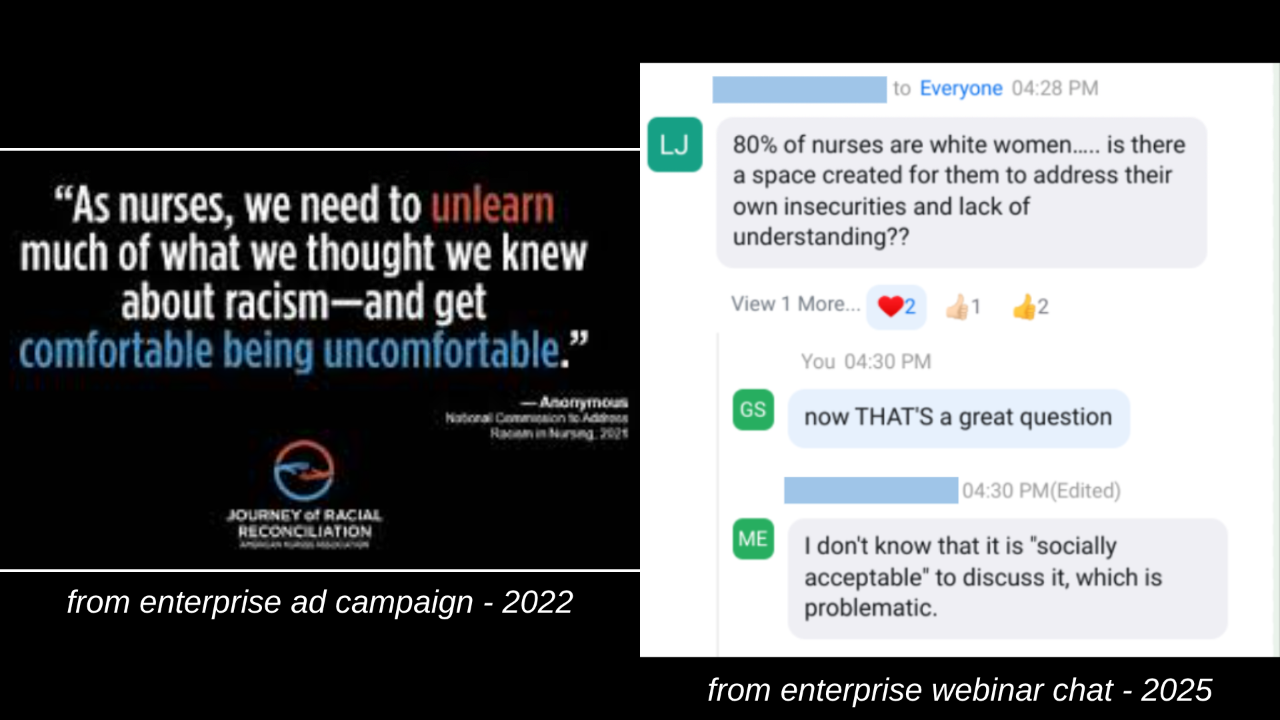
As of today, March 23, 2026 two hundred and sixteen days have passed since the verdict in Joppy v. HCA HealthOne, the landmark case at the intersection of racism in nursing, workplace mobbing and Civil Rights.
The enterprise hasn’t commented on the verdict in Joppy v. HCA HealthOne. They’ve never acknowledged the facts underlying the case, or even responded to direct outreach by several people over several years, which leads to the obvious question: What’s their strategy?
We can only speculate, so I developed a list of ten potential reasons why the enterprise hasn’t said anything about Joppy v. HCA HealthOne. We’re exploring each of these ten possible reasons over ten business days, and after five days evidence shows:
- The enterprise has been aware of Joppy v. HCA HealthOne since early to mid 2022, when Joppy’s claims of race discrimination and retaliation were filed in US District Court;
- The enterprise is at least aware of the issues in Joppy v. HCA HealthOne, i.e. race discrimination and retaliation in the nursing workplace;
- The enterprise may not understand or appreciate the legal and historical significance of Joppy v. HCA HealthOne, which if true is a dereliction of duty.
- The enterprise does more than just comment about ongoing cases. According to their CNO, “(W)e often have outreach with the individual or their representative or their attorney and we let them tell us what would be most helpful, particularly when it’s a legal issue.”
- The enterprise and AACN policies regarding what issues they choose to speak on and who they choose to advocate for are confusing and contradictory. The enterprise and AACN say they don’t comment about cases involving individual nurses or workplace disciplinary issues, and only focus on issues of concern to the nursing profession. Why don’t the enterprise and AACN consider the racism and mobbing evidenced in Joppy v. HCA HealthOne as issues of concern to the nursing profession? Do the enterprise and AACN consider racism and mobbing in the nursing workplace as issues of concern for patient safety and community health? The enterprise and AACN openly voiced support for a nurse found guilty of negligent manslaughter and abuse of an impaired adult, who was also disciplined with termination and loss of license.
Here’s what remains for us to explore this week as potential reasons why the enterprise hasn't commented on the verdict in Joppy v. HCA HealthOne, has never acknowledged the facts underlying the case or even responded to direct outreach by several people over several years:
- The enterprise finds the facts of Joppy v. HCA HealthOne disquieting;
- The enterprise fears Joppy v. HCA HealthOne undermines its branding;
- The enterprise fears it might upset its most dominant demographic if it mentions Joppy v. HCA HealthOne;
- The enterprise is aligned with the Defendant in Joppy v. HCA HealthOne;
- The enterprise has a financial conflict regarding Joppy v. HCA HealthOne
Today is Day 6
- The enterprise finds the facts underlying Joppy v. HCA HealthOne disquieting
Racism and mobbing are closely-related challenges in contemporary nursing education, practice and professional organizations.
“Even as a new nurse in an institution you have rights. Don't let these miserable nurses bully you out of your job and bully you away from your goals. I think especially in critical care the bullying and the lateral violence, the plain old nurse violence is the worst. You really have to know how to stand up for yourself.”
“This study (on workplace mobbing) (pdf) reveals that exposure to bullying in the professional status subscale during the first five years of nurses’ careers significantly negatively affects their quality of work life. It highlights the need for greater support for nurses in the early years of their careers in addressing this issue within their work environments.”
Racism in nursing also has deep historical roots that persist, (pdf) “Though astute observation and analysis, W.E.B Du Bois arrived at conclusions (regarding social determinants of health) that the white health-care establishment of the day had not. Du Bois lived at the same time as the legendary Florence Nightingale, often considered the founder of modern nursing… (but) more than a century after Du Bois’ treatise and Nightingale’s death in 1910, the nursing profession struggles to adopt concrete strategies to uproot historical and ongoing racism within its ranks, which affects individual, community and societal well-being.”
“What is rarely discussed in nursing history is Nightingale’s racism and her political role in the genocide of Indigenous people under British rule. She counseled many key political figures and her writings on the subject show that she was a staunch supporter of British colonialism, even with the knowledge of the death and destruction left in its wake. She believed Indigenous lives were a small price to pay for the expansion of the British Empire. Although some of her contemporaries recognized the brutality of the colonial system, Nightingale believed imposing British culture to be necessary. Anything else, she believed, “would be simply preserving their barbarism for the sake of preserving their lives.””
Has the enterprise remained silent because it finds the racism and workplace mobbing evident in Joppy v. HCA HealthOne disturbing, disquieting and/or uncomfortable? If so, that’s evidence of moral failure from an org that says it serves the interests of over five million registered nurses. It’s cowardice.
Tomorrow’s speculation: The enterprise fears Joppy v. HCA HealthOne undermines its branding
